8 min read · 2026-09-13
10x10 Custom Pop-Up Canopy Tents: Sizes, Printing & Buying Guide
Exact dimensions, print layout zones, weighting math and package options for the 10x10 custom canopy tent — the standard vendor footprint.
Quick answer
A 10x10 custom pop-up canopy tent covers 100 sq ft, packs to roughly 60 x 10 x 10 inches in a wheeled bag, and weighs 45–60 lb with a commercial 40mm aluminum frame. Printable areas are the canopy top, four valances and optional walls; a printed commercial 10x10 typically costs $600–$900, or $1,400–$2,200 as a full booth kit.
Why 10x10 is the default footprint
The 10x10 exists because event organizers sell space in 10-foot increments. Farmers markets, craft fairs, street festivals, sponsor rows and most outdoor trade show sections all assign a single 10x10 pitch. Buying anything else means either wasting purchased space or overhanging your neighbor. Every custom event tent in this size is built around that reality.
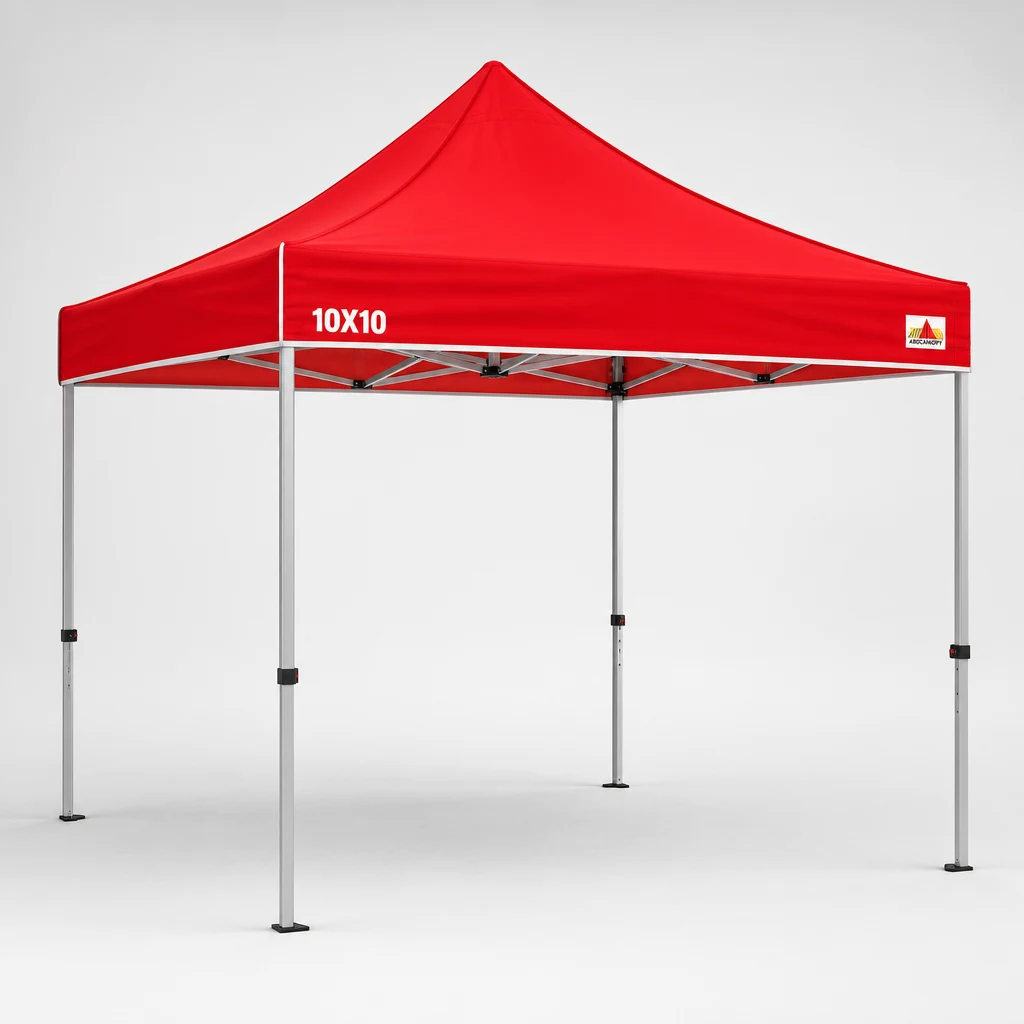
| Spec | Commercial 10x10 | Notes |
|---|---|---|
| Covered area | 100 sq ft (10ft x 10ft) | Matches the standard assigned vendor pitch |
| Peak height | Approx. 10ft 8in | Adjustable leg height, 3 stops typical |
| Clearance height | 6ft 4in – 7ft 6in | Set higher for airflow, lower in wind |
| Frame | 40mm hexagonal aluminum | Push-button stops, reinforced truss bars |
| Fabric | 600D weatherproof polyester | Dye-sublimated, water-repellent finish |
| Packed size | ≈60 x 10 x 10 in | Wheeled roller bag |
| Total weight | 45–60 lb | Frame plus printed top |
| Setup | Under 5 minutes, 2 people | No tools required |
Print layout: where the logo actually gets seen
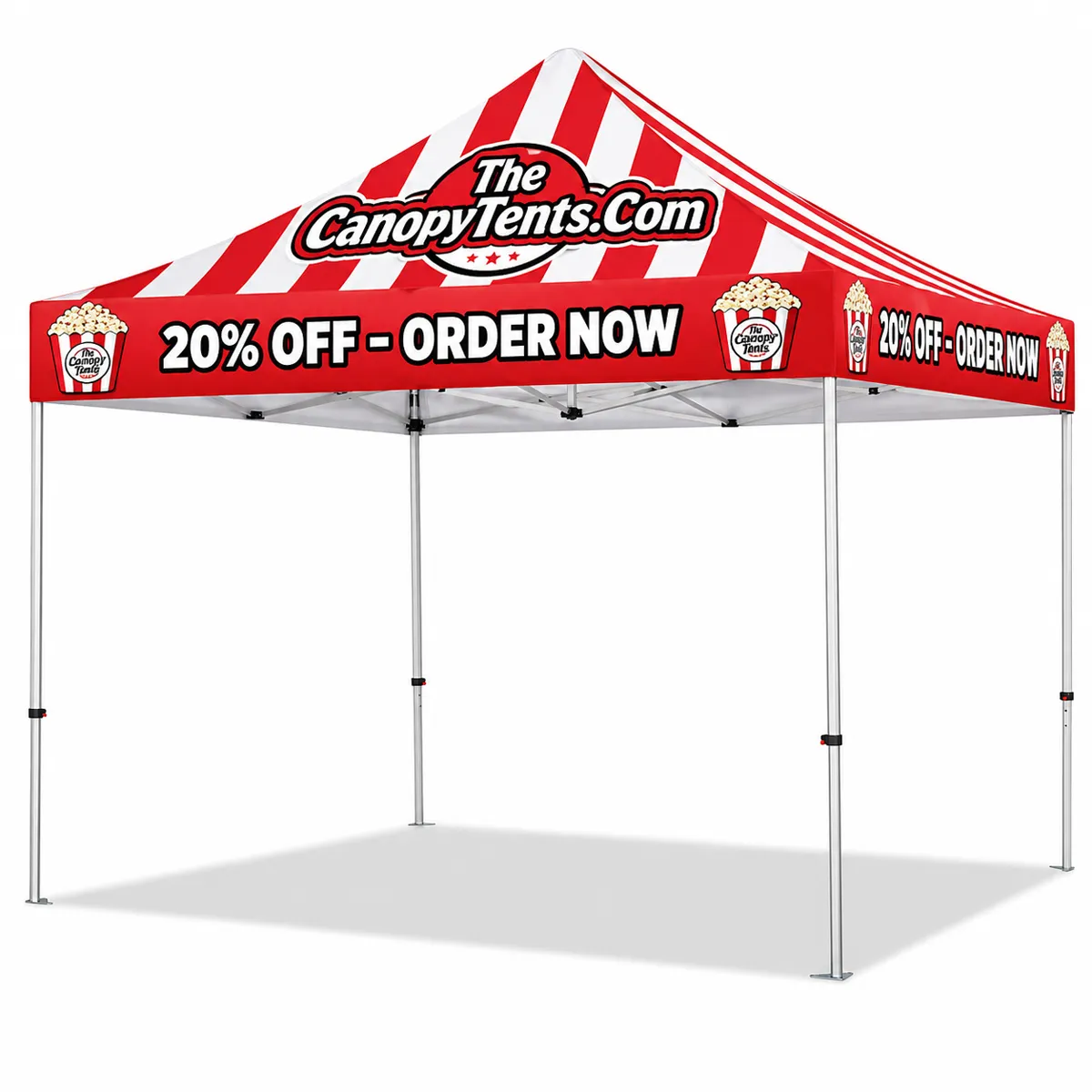
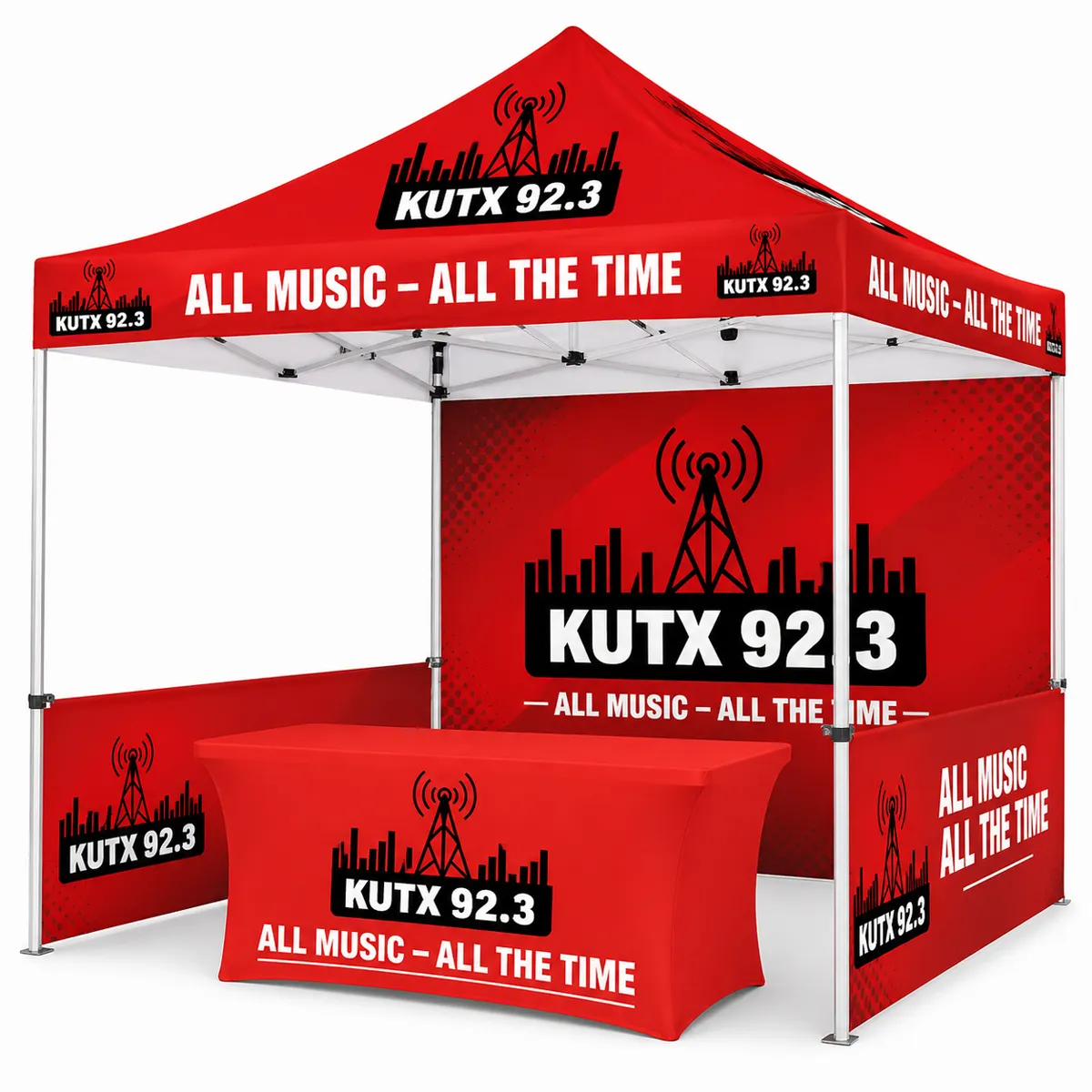
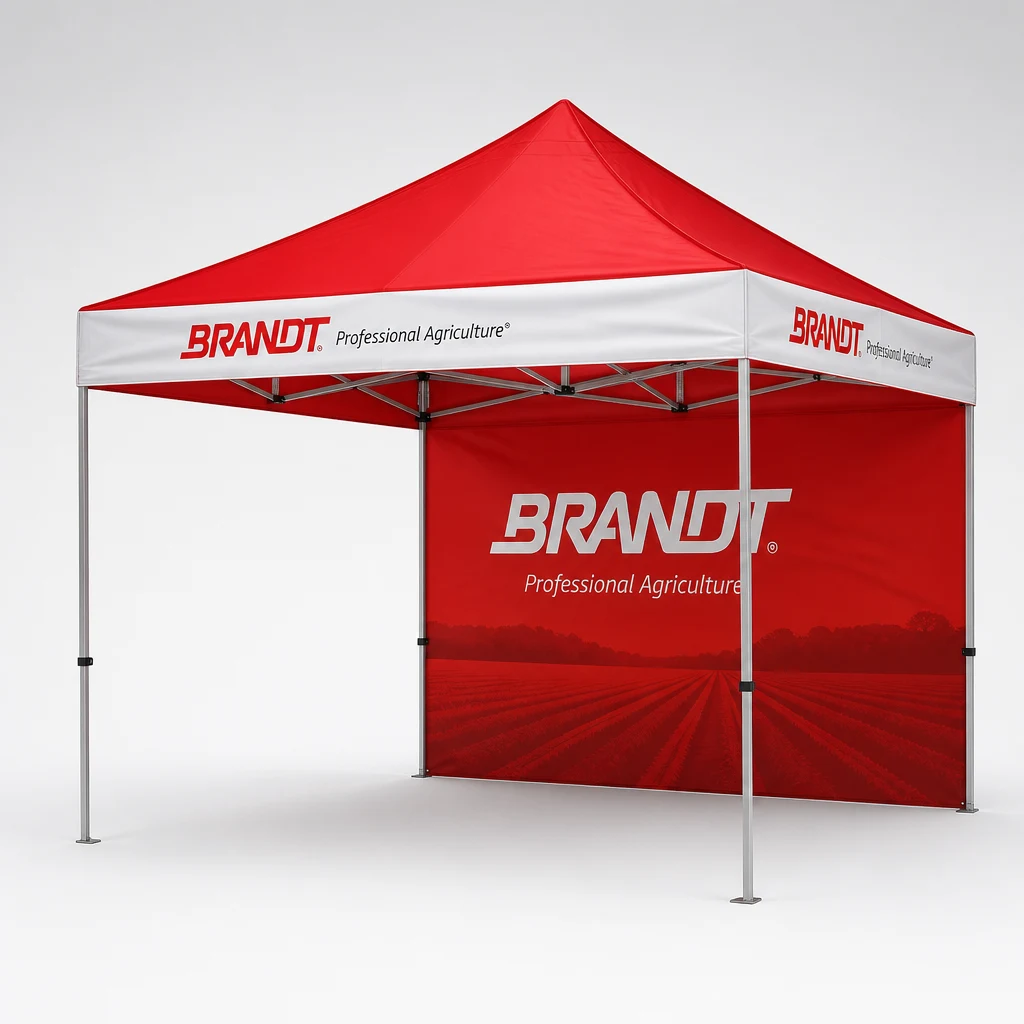
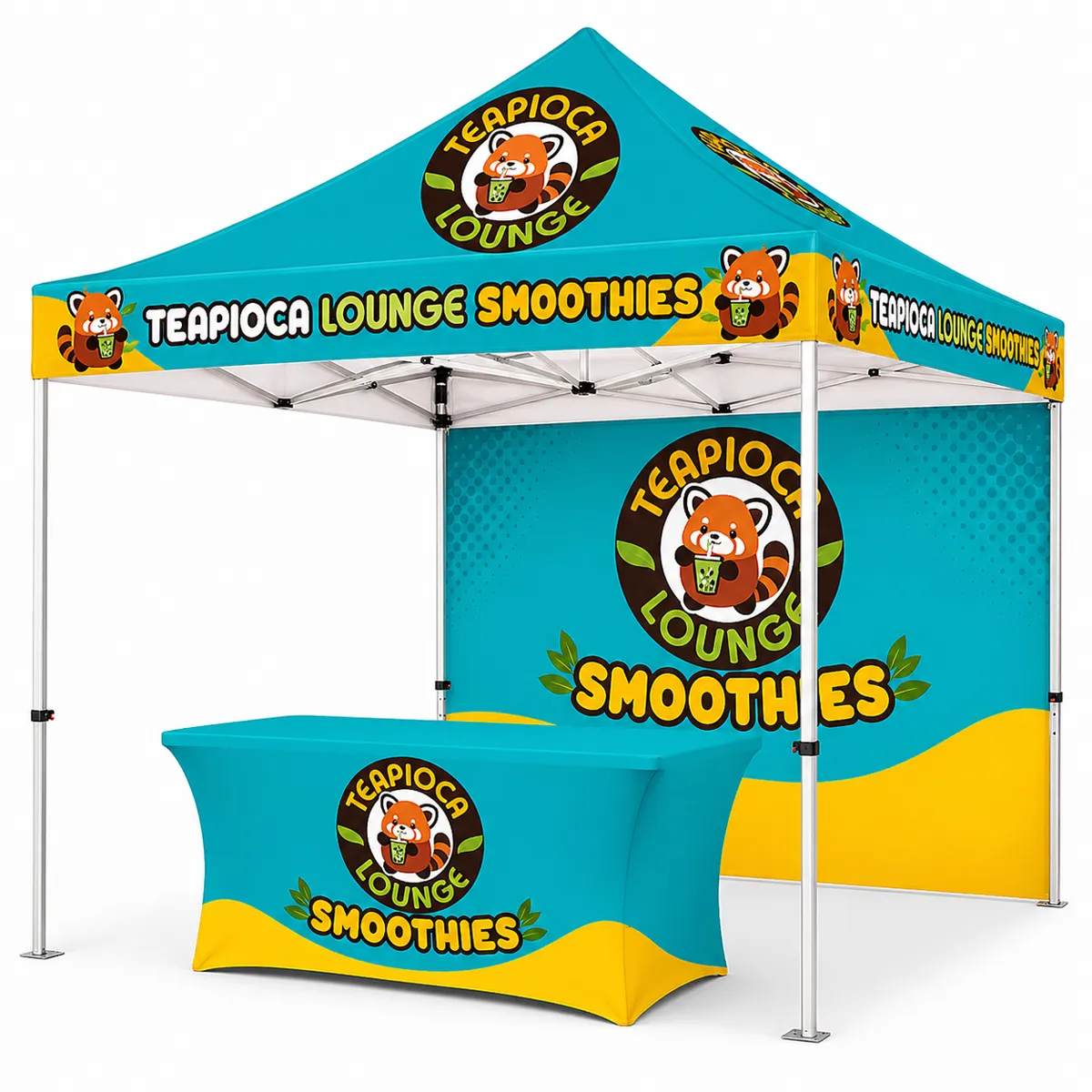
A 10x10 has four printable zones and they are not equally valuable. The four valances are read at eye level from across an aisle and carry the brand name. The canopy top is for aerial photography, drone shots and elevated venues. The peak is a small accent. The back wall, if you add one, is the surface that appears behind every photograph taken at your booth — which makes it the highest-ROI print in the kit. Configure it from the printed tent walls range.
- Valances: brand name and one short offer line, large and high contrast.
- Canopy top: full-bleed color field or repeated mark; avoid fine type.
- Back wall: logo plus the message you want in every customer photo.
- Half walls: counter-level product or QR call to action.
- Keep critical copy 3 inches clear of seams and fold lines.
Weighting a 10x10 correctly
The most common cause of a wrecked 10x10 is under-weighting. Plan 25 lb per leg as an absolute minimum on pavement and 40 lb per leg for open, exposed lots. Sandbags are the portable option; plate weights stack low and look tidier on a trade show floor. Stakes only work on turf and only where the venue permits ground penetration. Our canopy accessories section carries both weight styles and the wheeled bags that make them transportable.
| Surface | Exposure | Per leg | Method |
|---|---|---|---|
| Turf / grass | Sheltered | Stakes + 15 lb | Stakes with guy lines |
| Turf / grass | Open field | Stakes + 30 lb | Stakes plus sandbags |
| Asphalt / concrete | Sheltered street | 25 lb | Sandbags on each foot |
| Asphalt / concrete | Open parking lot | 40 lb | Plate weights, low profile |
| Indoor hall | None | 10 lb | Stability only, per venue rules |
What a 10x10 kit should include
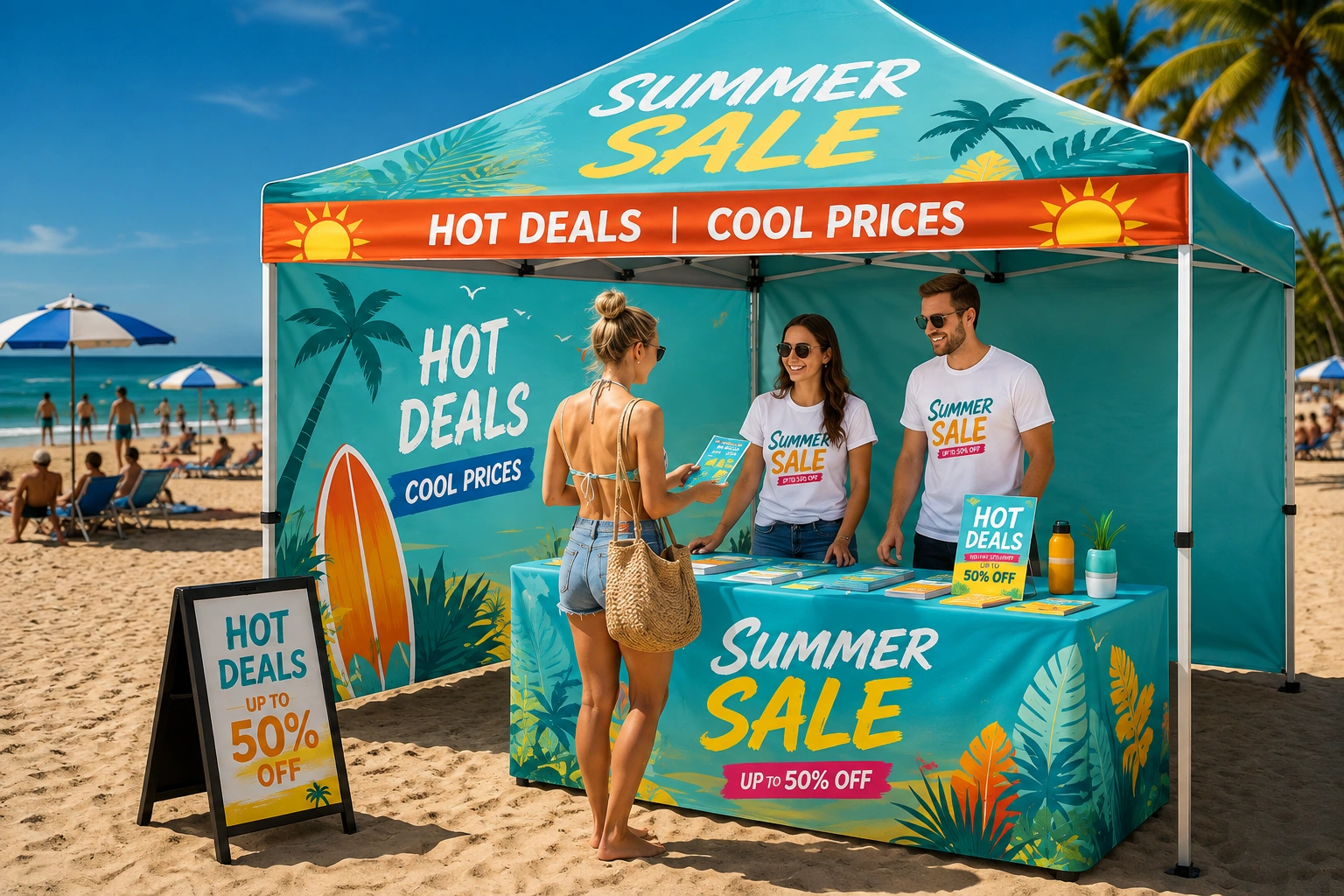
A working 10x10 booth is the canopy, one printed back wall, two half walls, a fitted table throw for a 6ft table, one or two custom flags, four weights, and a wheeled bag. Built piece by piece that list creeps past two thousand dollars; bought as a matched bundle it does not. The 10x10 tent packages collection is assembled exactly around this list, and the Gold tent packages are the upgraded version with heavier frames.
Care that doubles the lifespan
Never pack a wet top — mildew stains dye-sublimated fabric permanently and no cleaning reverses it. Open the canopy in the shade to dry if you strike in rain. Wipe aluminum after coastal or salted-road events. Store the bag off concrete floors. Replace a bent leg immediately rather than forcing the frame, using stocked parts from replacement tent hardware.
Vendors running dense market circuits in Los Angeles, New York or Houston should also confirm the local fire code's flame-certification requirement for temporary fabric structures; the U.S. Fire Administration publishes the national background, and organizers list the local rule in the vendor packet.
Frequently asked questions
- What are the actual dimensions of a 10x10 canopy tent?
- The footprint is 10ft x 10ft at the feet, peak height is about 10ft 8in, and adjustable clearance height runs roughly 6ft 4in to 7ft 6in.
- How much does a 10x10 custom canopy tent weigh?
- A commercial 40mm aluminum frame with a printed top weighs 45–60 lb and packs into a wheeled bag around 60 inches long.
- How many weights do I need for a 10x10 pop-up tent?
- Plan 25 lb per leg on sheltered pavement and 40 lb per leg in open lots — 100 to 160 lb total for the tent.
- Can a 10x10 canopy tent be printed on all four sides?
- Yes. All four valances, the canopy top and the peak can be printed, and full or half walls add four more printable surfaces.
- Does a 10x10 custom tent fit a standard vendor space?
- Yes — 10x10 is the footprint most markets, fairs and outdoor shows assign, which is why it is the default size.