9 min read · 2026-09-13
Custom Pop-Up Canopy Tents: Complete Guide for Businesses & Events
Everything a business needs before buying custom pop up canopy tents — fabric, frames, print methods, sizing, weighting, lead times and total cost of ownership.
Quick answer
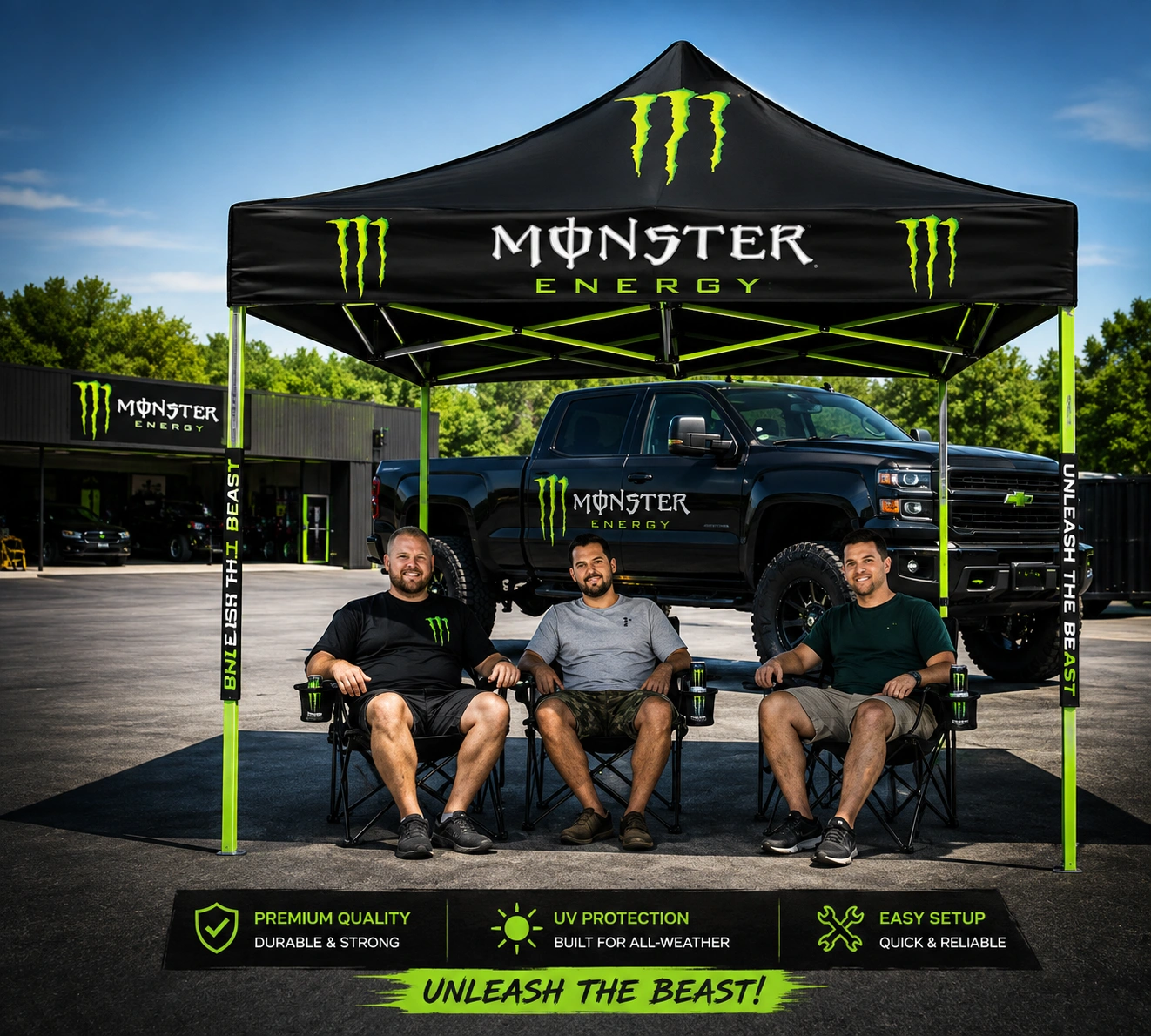
Custom pop-up canopy tents are portable 600D polyester shelters on collapsible aluminum frames, dye-sublimation printed with your logo across the canopy, valances and optional walls. A commercial 10x10 runs roughly $600–$900 for the printed canopy and frame, sets up in under five minutes with two people, and lasts multiple seasons when weighted correctly and dried before storage.
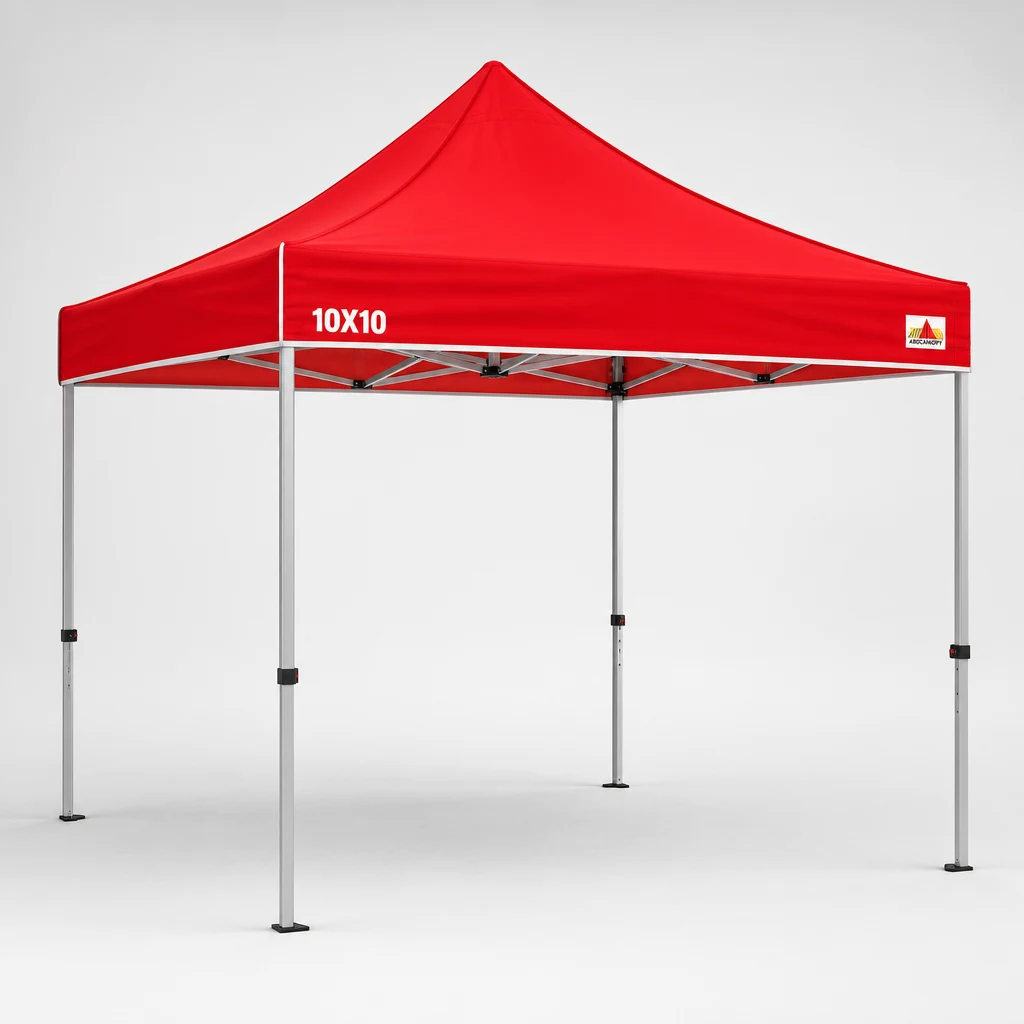
What a custom pop-up canopy tent actually is
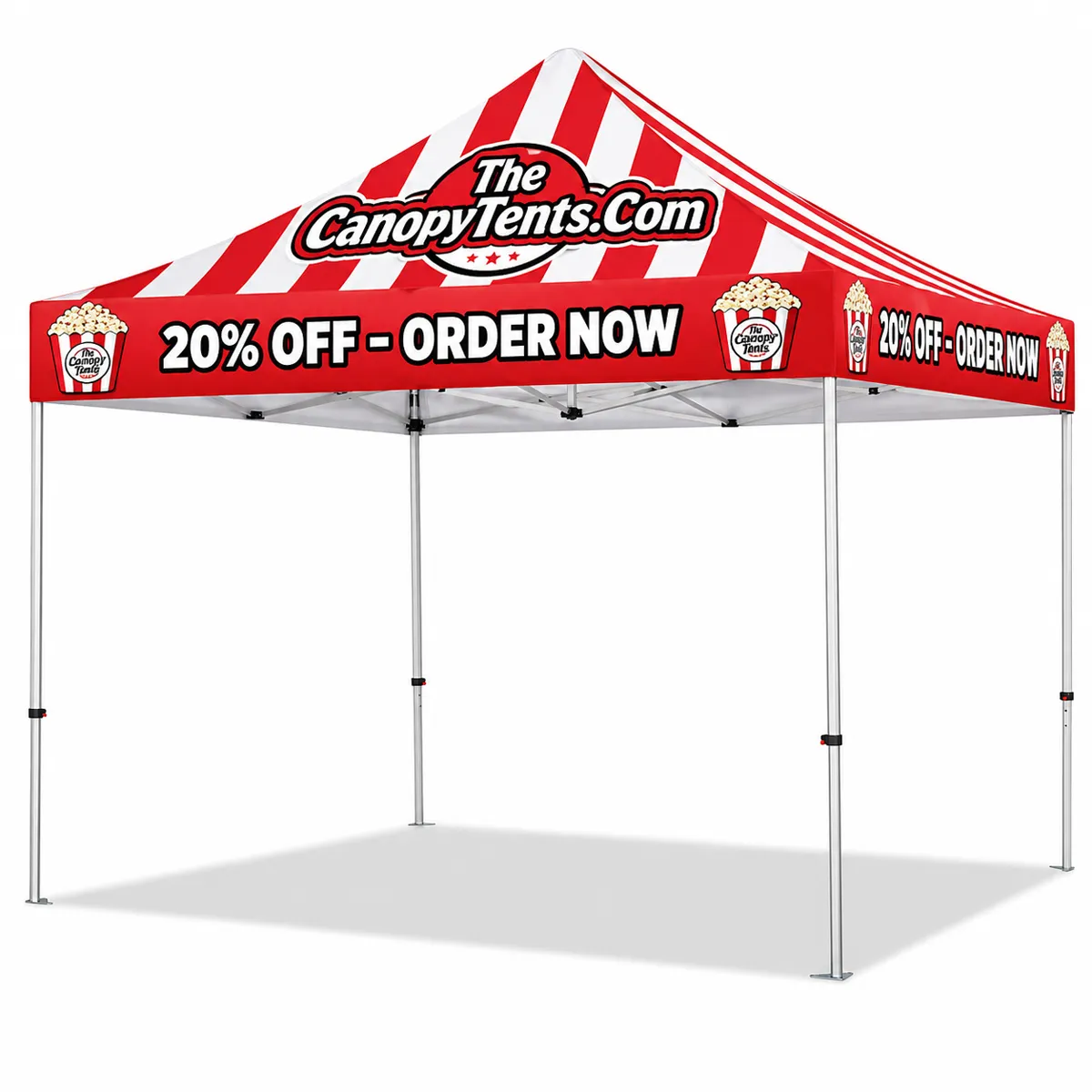
A custom pop-up canopy tent is three things sold as one: a collapsible scissor frame, a printed fabric top, and the accessories that keep both on the ground. Businesses buy them because no other display converts an empty patch of asphalt into a branded storefront in five minutes. Everything else on the market — inflatables, hardwall booths, marquees — either needs power, needs a crew, or needs a venue. Our full range of custom canopy tents covers the same footprint sizes most event organizers assign, so the tent fits the space you were sold.
The term "pop-up" refers to the frame mechanism, not the quality tier. A commercial pop-up uses 40mm hexagonal aluminum legs and reinforced truss bars; a big-box pop-up uses thin painted steel. Both open the same way. Only one survives a season of loading, unloading and wind. That distinction matters more than any other spec on this page, and it is the single thing buyers most often get wrong when comparing two quotes.
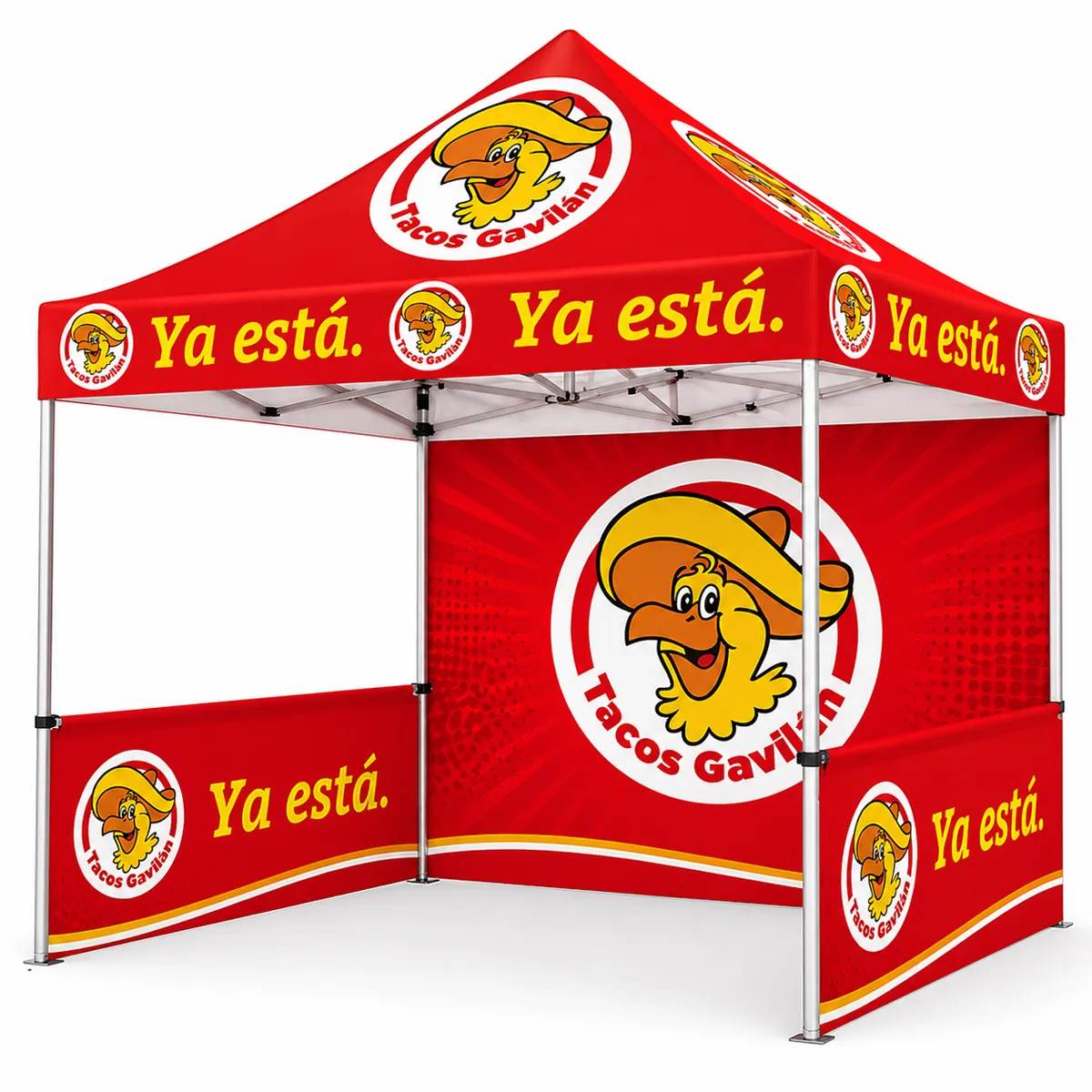
Fabric, print and why dye-sublimation wins outdoors
Printed pop up tents are produced two ways. Screen printing lays ink on top of the fabric, charges per color, and cracks at the fold lines after a season of packing. Dye-sublimation gasses the ink into the polyester fiber itself, so the graphic cannot peel, the fabric still breathes, and a photographic design costs the same as a one-color wordmark. Every canopy we produce is dye-sub printed on 600D weatherproof polyester with a water-repellent finish and a UV-stable ink set.
| Method | Color cost | Durability | Best use |
|---|---|---|---|
| Dye-sublimation | Unlimited colors, one price | Ink is in the fiber — no cracking or peeling | All full-color canopy printing |
| Screen print | Charged per color | Sits on the surface, cracks at folds | Very simple one-color jobs |
| Heat transfer vinyl | Per element | Lifts at edges after heat cycles | Small add-on logos only |
| Direct UV | Unlimited | Stiffens fabric, poor fold tolerance | Rigid signage, not canopies |
Choosing a size that matches the booth you were assigned
Organizers sell space in fixed footprints. A 10x10 canopy fits the standard single vendor space with room for a 6ft table and two staff. A 10x15 buys you a product wall or a queue lane. A 10x20 covers a double booth with a demo area. Buy the tent for the space you are usually assigned, not the largest space you might one day rent — an oversized canopy that overhangs the line gets moved by the event marshal. Compare footprints on our event tents pages before you commit.
| Size | Covered area | Staff + table | Typical use |
|---|---|---|---|
| 10x10 | 100 sq ft | 2 staff, one 6ft table | Farmers markets, single vendor rows |
| 10x15 | 150 sq ft | 3 staff, table plus product wall | Craft fairs, sampling activations |
| 10x20 | 200 sq ft | 4–5 staff, demo zone | Trade shows, dealer events, hospitality |
| 20x20 | 400 sq ft | Team booth with seating | Festivals, sponsor villages |
Walls, weights and the parts nobody quotes
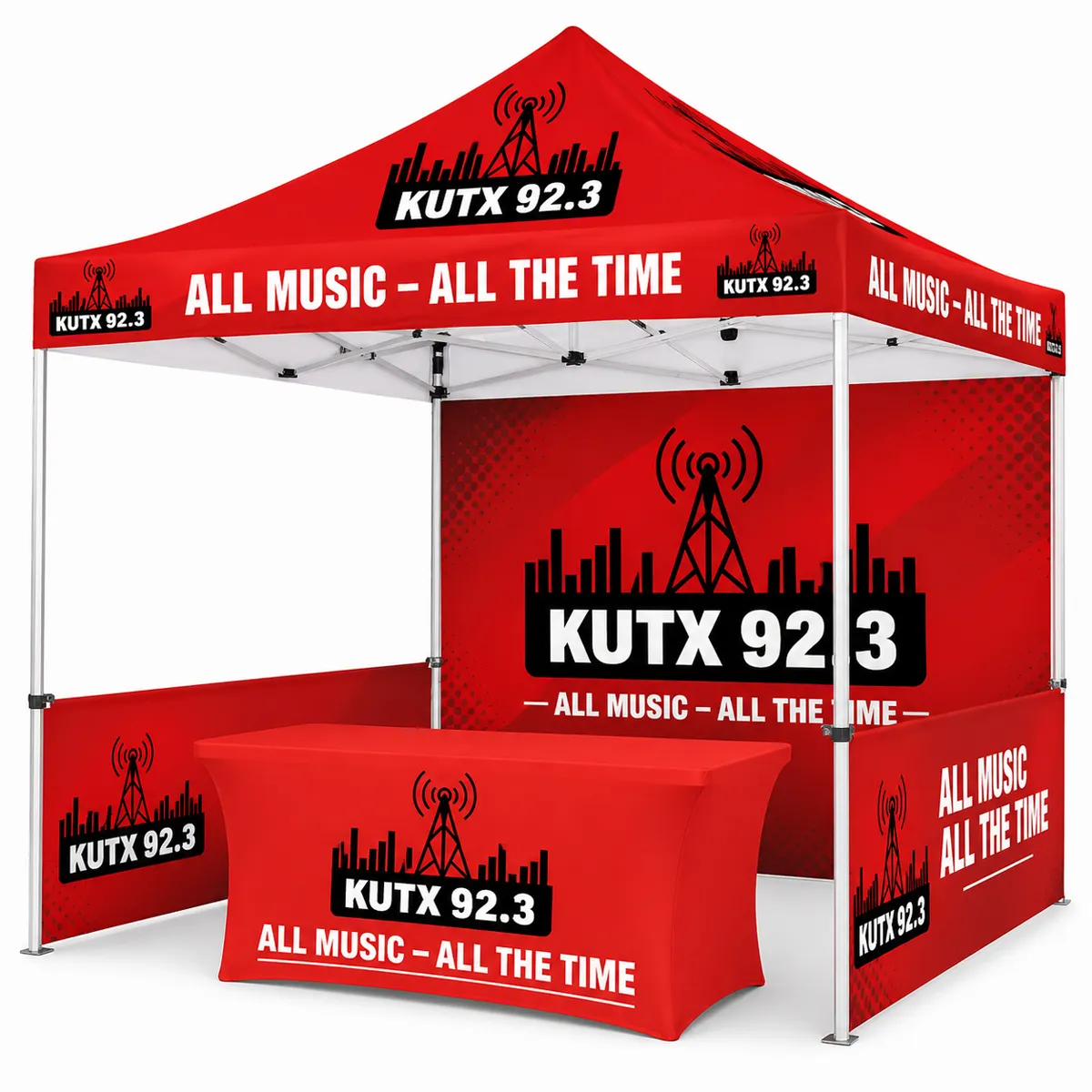
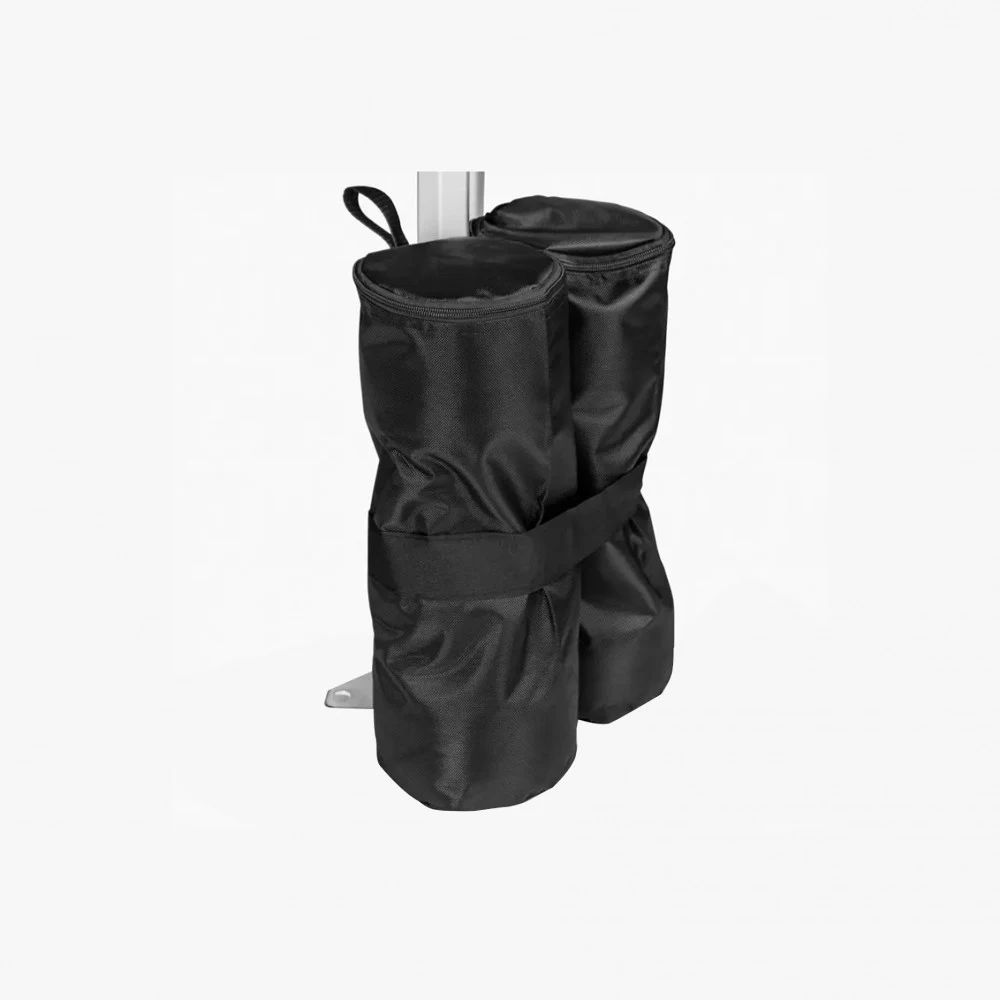
A canopy top alone is half a booth. A printed back wall turns the tent into a photographable backdrop and blocks the low sun that otherwise blinds your staff all afternoon; half walls define a counter line and stop foot traffic cutting through the booth. Browse configurations on the canopy side walls page. Weight is the part that gets skipped and the part that ends events early: plan on 25–40 lb per leg, using tent accessories such as sandbags or plate weights on hard surfaces, and stakes only where the organizer permits ground penetration.
Building the full branded booth
Brands that show well treat the canopy as one surface in a set. A printed custom table cover carries the logo at eye level for seated visitors, a pair of feather flags pulls traffic from down the aisle, and a retractable banner stand handles the detailed message the canopy is too far away to deliver. Buying these as a bundle is usually cheaper than buying them over three seasons — see the complete event tent kits and the Gold tent packages for pre-matched sets.
Artwork, proofs and lead times
Send vector artwork — AI, EPS or PDF — or raster at 150 DPI at final size. Keep critical copy out of the seam and fold zones, and remember that valance text is read from ground level at an angle, so set it large and high-contrast. You can upload artwork directly and get a rendered proof back within 24 hours; production begins only after you approve it, and standard production runs five business days plus transit.
Total cost of ownership, not sticker price
A $350 tent replaced every season costs more over three years than a $750 commercial frame that gets a $40 replacement leg. Ask whether individual parts are stocked before you buy: our replacement tent hardware covers legs, feet, truss bars and pull-pins, which means one failure is a parts order rather than a new purchase. That single policy question separates a display you own from a display you rent by accident.
Climate shapes the spec too. Teams in Phoenix should prioritize UV-stable ink and vented peaks, crews in Chicago need heavier weights for lake wind, and coastal Miami vendors should rinse salt off aluminum after every show. General guidance on portable-shade safety and heat exposure for outdoor workers is published by OSHA.
Frequently asked questions
- How long do custom pop-up canopy tents last?
- A commercial aluminum frame with a dye-sublimated 600D top typically lasts 5+ seasons of regular events when weighted properly and dried before storage. Economy steel frames often fail within one to two seasons.
- Can one person set up a pop-up canopy tent?
- A 10x10 can be managed alone in calm conditions, but two people is the safe standard and the only realistic option for 10x15 and larger.
- Are custom canopy tents waterproof?
- They are water-repellent rather than waterproof. A 600D coated polyester top sheds rain well at a proper pitch; seams should not be tested under standing water, and the tent must be dried before packing.
- Do I need walls with my canopy tent?
- At least one printed back wall is recommended. It blocks low sun, gives a branded photo backdrop, and stops traffic cutting through your booth.
- How fast can I get a printed pop-up tent?
- A rendered proof comes back within 24 hours of receiving artwork, and standard production is five business days after approval, plus shipping transit.